Back
Can the SEC's Disclosure Model and the CFTC's Principles-Based Approach Coexist?

Gana Misra
Dec 9, 2025
SEC
Updates
Disclosures
Picture this: On one side, we have the SEC, meticulously crafting detailed disclosure requirements like an architect drawing up blueprints. On the other, the CFTC takes a more flexible approach, setting broad principles and trusting market participants to color within the lines. It's a bit like comparing a detailed instruction manual to a set of guiding principles. Both work, but they work differently.
Understanding the Two Approaches
The SEC's Disclosure Philosophy
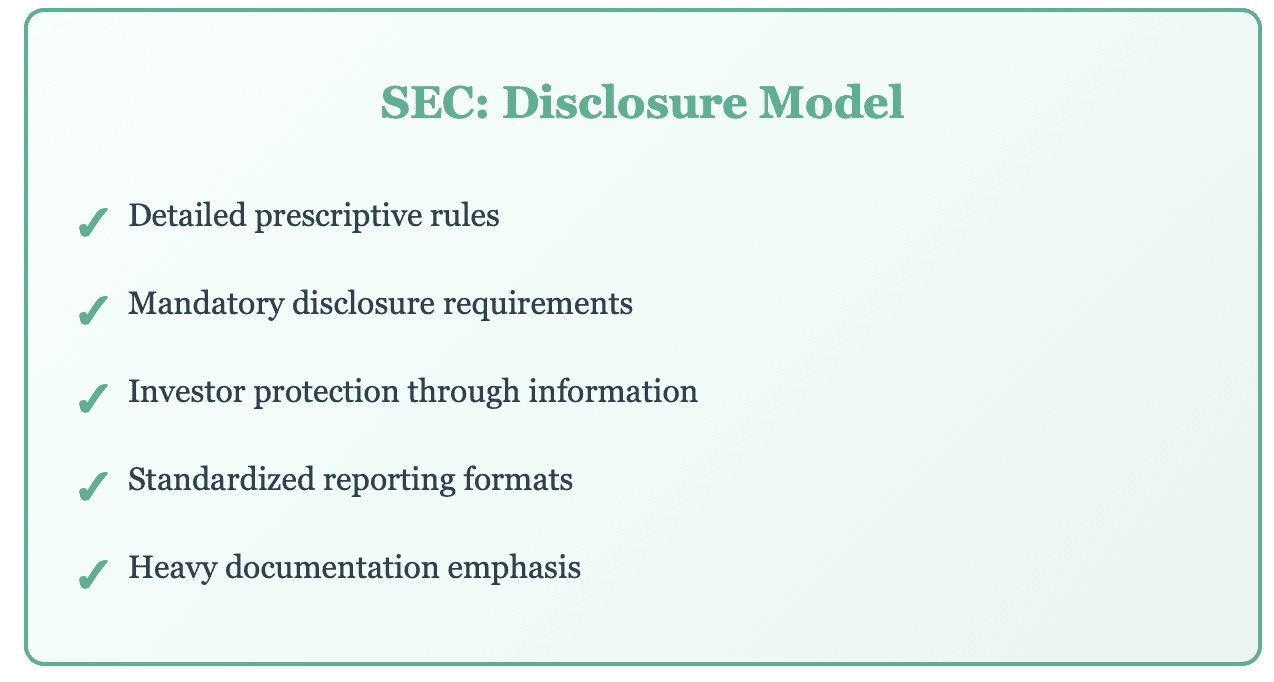
The SEC operates on a simple yet powerful premise: sunlight is the best disinfectant. Born from the ashes of the 1929 stock market crash, the SEC believes that informed investors make better decisions. Their approach is exhaustive and exhausting in equal measure. Companies must disclose everything from executive compensation to risk factors, from related-party transactions to material events.
This model creates a paper trail that would make any detective proud. Form 10-K, Form 8-K, proxy statements, the list goes on. Every document serves a purpose: to ensure that no investor is left in the dark. It's transparency taken to its logical extreme, and it has served retail investors remarkably well for nearly a century.
Real-World Impact
Consider the case of Enron. While the disclosure model didn't prevent the scandal, it did provide the forensic evidence needed to understand what went wrong. The paper trail, though manipulated, eventually revealed the truth. This illustrates both the strength and limitation of disclosure-based regulation.
The CFTC's Principles-Based Framework
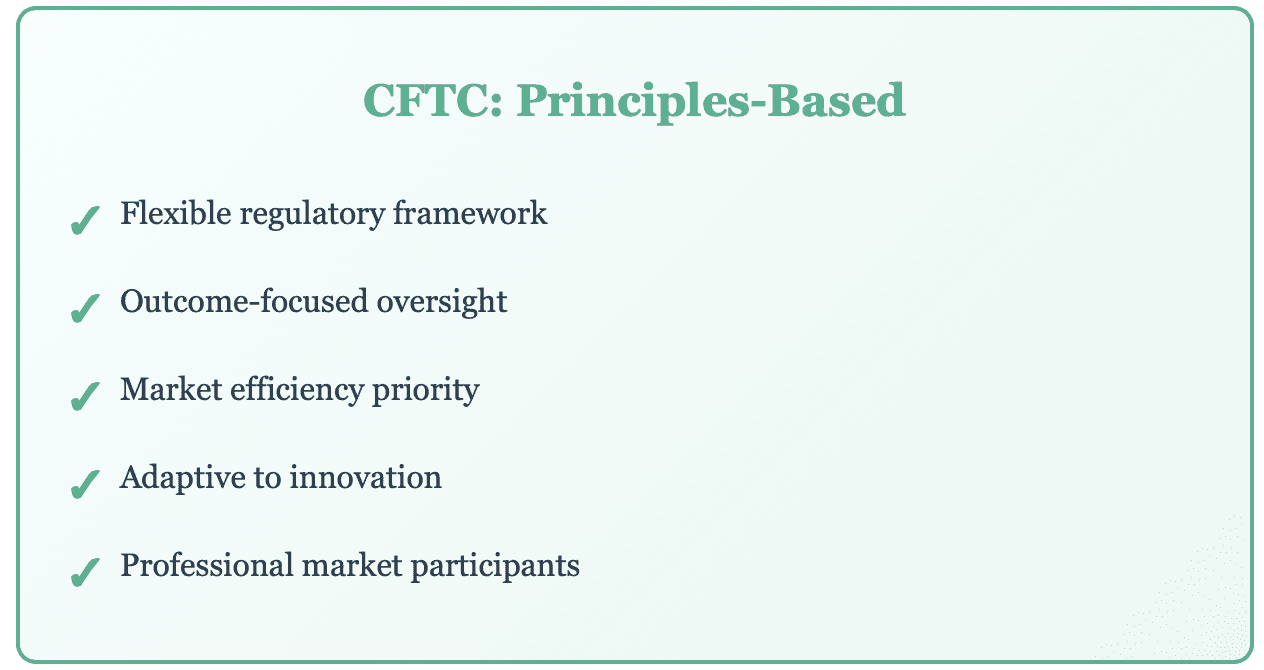
Meanwhile, the CFTC governs a different beast entirely. Derivatives markets move at lightning speed, with sophisticated participants who know the game inside and out. Here, the CFTC asks a different question: What outcomes do we want, and how can we achieve them without strangling innovation?
Instead of spelling out every requirement in painstaking detail, the CFTC sets broad principles: maintain market integrity, prevent manipulation, ensure financial stability. How firms achieve these goals? That's largely up to them. It's a approach that acknowledges the expertise of market participants and the rapid evolution of financial products.
The Case for Coexistence
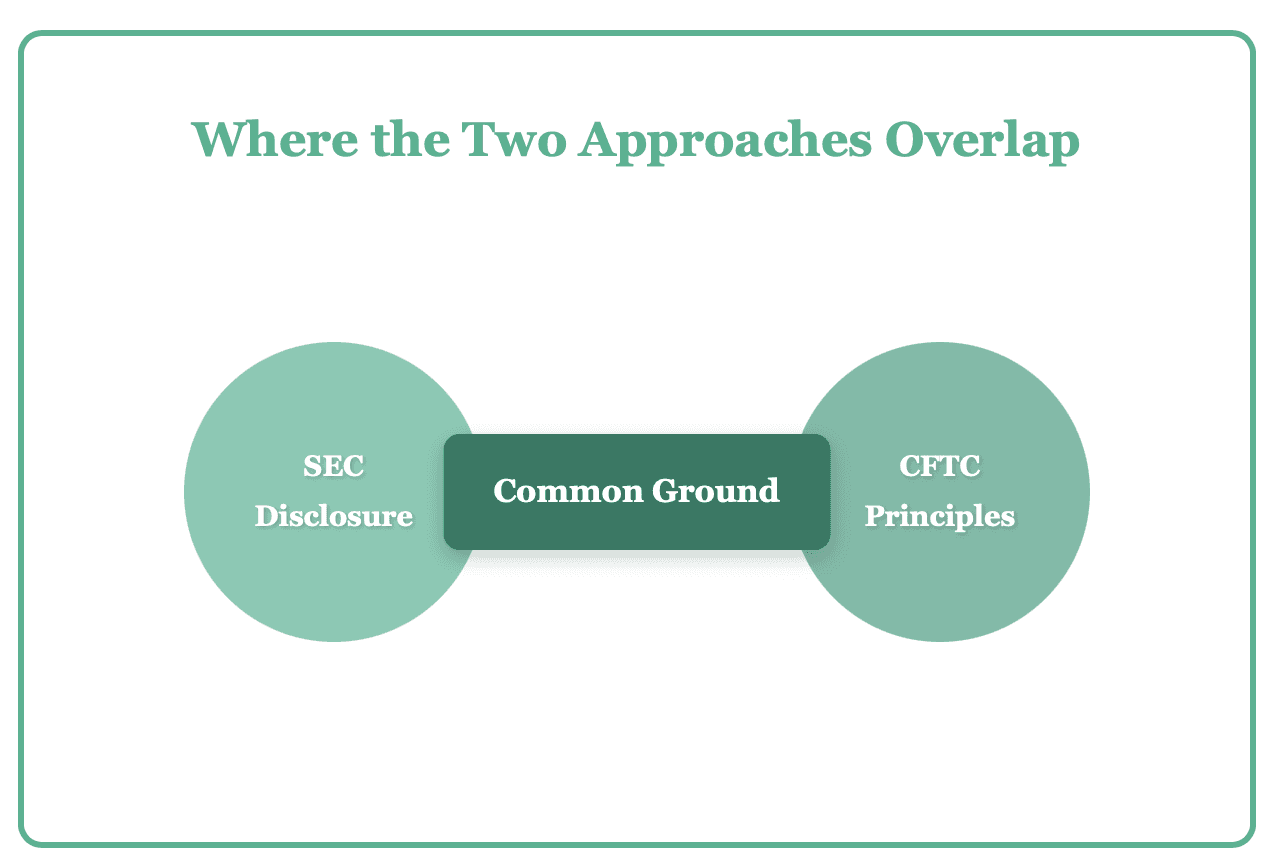
Here's where it gets interesting: these approaches aren't just compatible, they're potentially complementary. Think of it as a regulatory ecosystem where different strategies serve different needs.
Market Segmentation Works in Their Favor: The SEC primarily oversees securities markets dominated by retail investors who need protection through information. The CFTC regulates derivatives markets populated by sophisticated institutions. Different markets, different needs, different solutions.
Flexibility Meets Structure: The SEC's prescriptive approach creates a baseline of transparency that everyone understands. The CFTC's flexibility allows for innovation and adaptation. Together, they create a regulatory framework that's both stable and dynamic.
Cross-Pollination of Ideas: When regulatory approaches coexist, each agency can learn from the other. The SEC has adopted more principles-based elements in recent years, while the CFTC has strengthened its disclosure requirements for certain products.
The Challenges of Dual Regulation
But let's not sugarcoat it. Coexistence comes with headaches. Financial products increasingly blur the lines between securities and derivatives. Is a security-based swap a security or a derivative? The answer matters because it determines who regulates it and how.
Companies operating in both spheres face a compliance maze. Imagine running a firm that deals in both securities and derivatives. You're filing detailed disclosures for the SEC while maintaining principles-based compliance for the CFTC. It's like speaking two different regulatory languages simultaneously.
The Gray Areas
Digital assets have thrown a fascinating wrench into the works. Is cryptocurrency a security or a commodity? The SEC says some are securities. The CFTC claims jurisdiction over commodities. The result? Regulatory uncertainty that has both stifled and shaped innovation in the crypto space.
This isn't just academic hairsplitting. Real businesses must make real decisions based on which regulator might come knocking. The lack of clarity has pushed some companies overseas and left others in legal limbo.
Making It Work: Practical Solutions
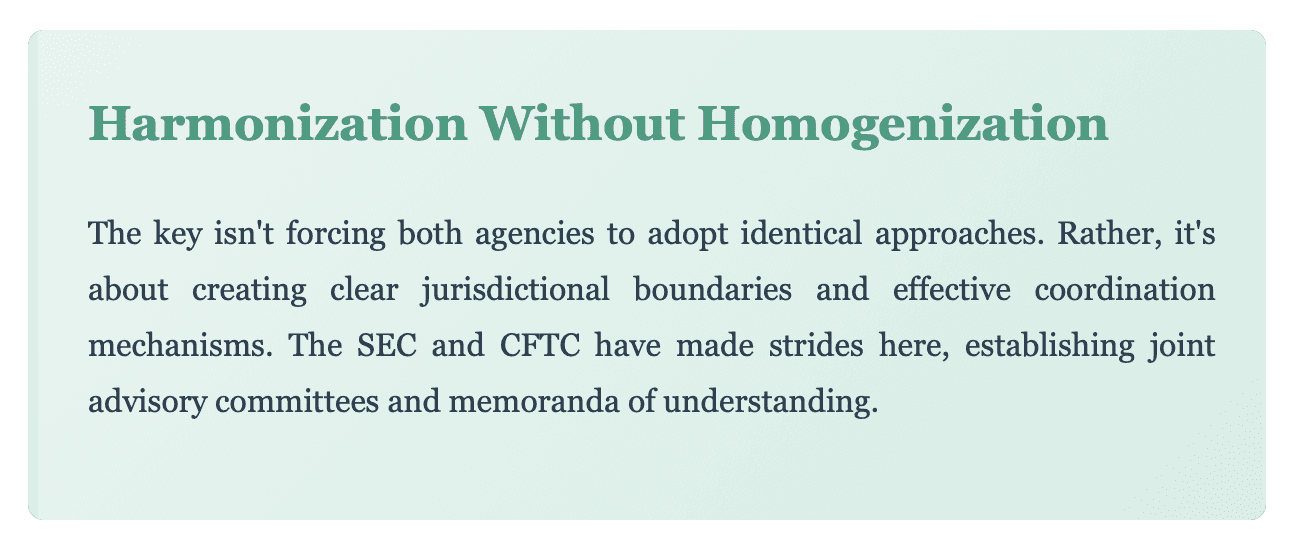
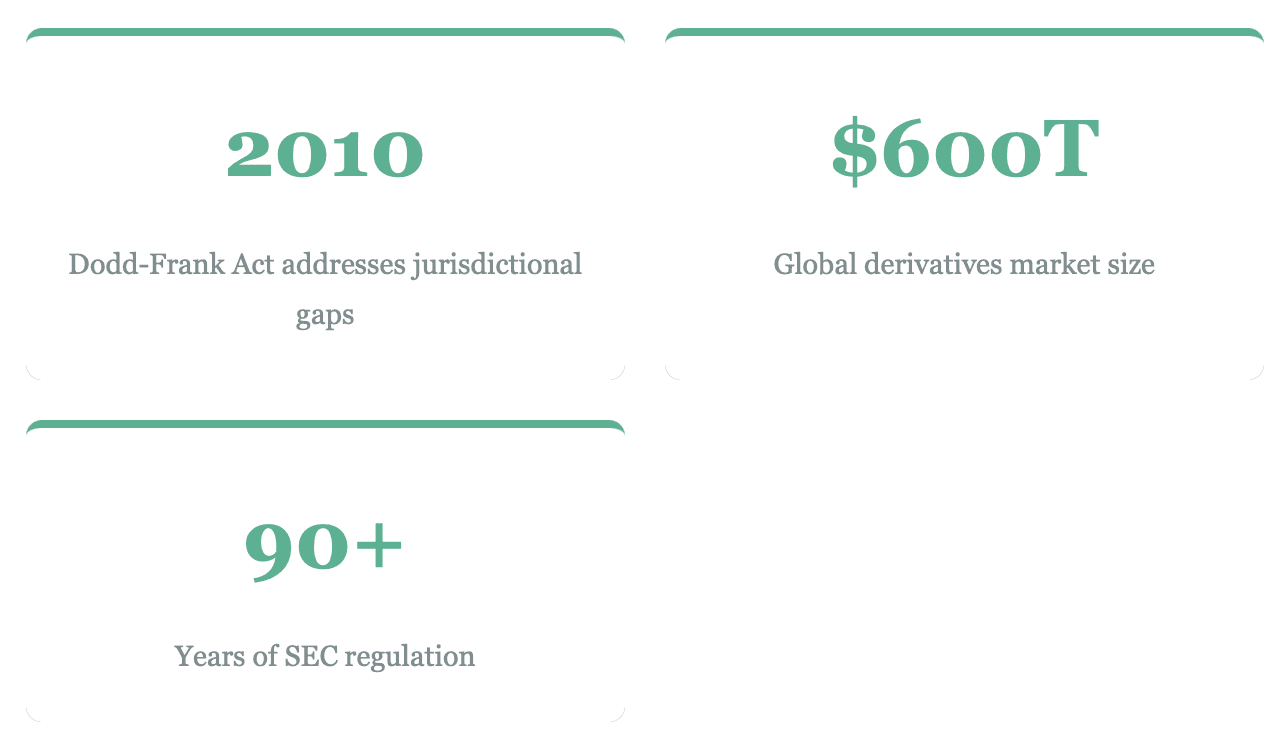
Consider the approach to swap regulation under Dodd-Frank. Rather than fighting over territory, the agencies divided responsibilities: security-based swaps to the SEC, other swaps to the CFTC. It's not perfect, but it demonstrates that coexistence is possible with clear rules of engagement.
Looking Forward
The financial landscape continues to evolve at breakneck speed. DeFi, tokenization, AI-driven trading—each innovation tests the boundaries of existing regulatory frameworks. The question isn't whether the SEC's and CFTC's approaches can coexist, but whether they can evolve together to meet emerging challenges.
There's a compelling argument that we need both approaches more than ever. The SEC's disclosure model provides essential transparency for an increasingly complex financial system. The CFTC's principles-based framework offers the flexibility needed to regulate rapid innovation without crushing it.
The conversation continues. As markets evolve, so too must our regulatory frameworks. The coexistence of different approaches isn't a bug—it's a feature of a resilient regulatory system.